My design principle:
"A good concept is only half the battle. If it cannot be manufactured, scaled, and integrated into a real business model, it cannot help anyone."
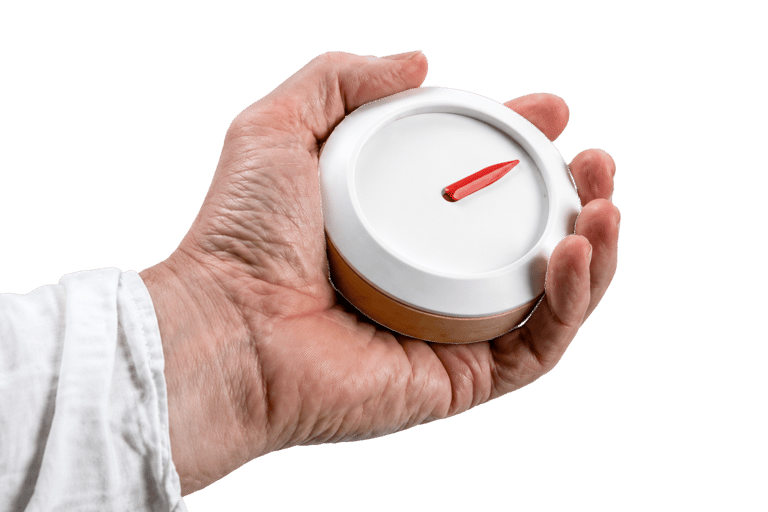
My FMP, Navigating with (un)certainty, was situated within a broader trajectory of DEMTECH, and in collaboration with Aumens, TU/e and care partner Vivent, I explored how warm intelligent navigation support could be integrated into The Compass to respond to moments of uncertainty during outdoor navigation for people living with dementia (PwD) [1], [2], [3], [4]. This project brought together the main direction I had been developing throughout my master: using emerging technologies as a design material to support quality of life in a realistic everyday context.
I follow the Design Leadership & Entrepreneurship track, with B&E, T&R, and U&S as my main expertise areas.
Reflection on Competence Integration in Final Master Project
PRESENT
FMP DESIGN PROCESS
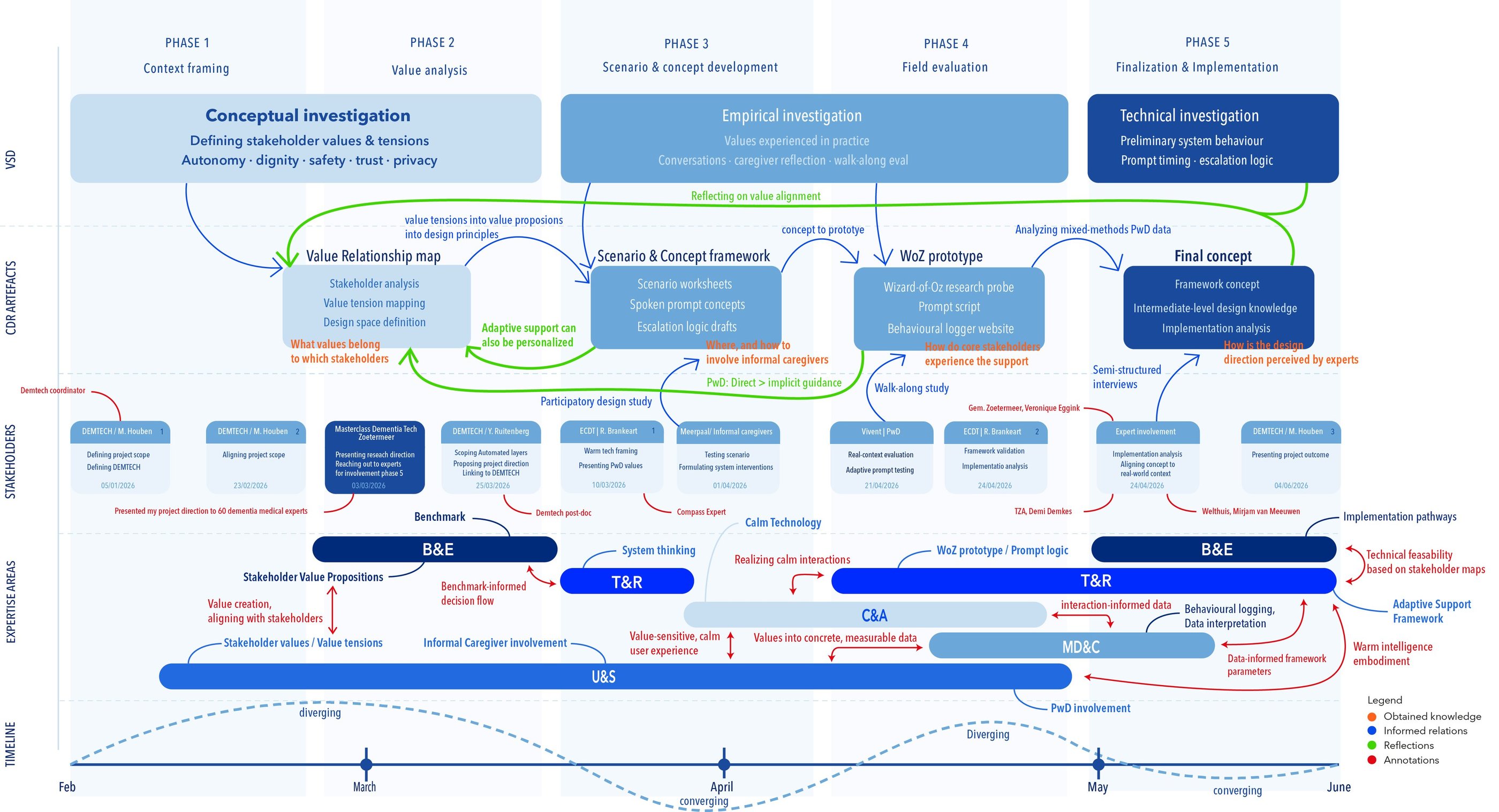
Figure 1. The Compass from Aumens' website [1]
The collaboration with Aumens during my FMP continued from my M2.1 project, in which I redesigned The Aumens Compass to better align with PwD. During M2.1, multiple co-creation sessions taught me that conventional design methods are not always appropriate in vulnerable contexts. Building on these experiences, I learned during my FMP to adapt research methods to participants’ capabilities, using walk-along testing and immediate reflections to gather more situated and actionable insights.
A second learning goal was to integrate MD&C more consciously into my design process. The lecture on humane AI by Kevin de Randamie helped me reflect on how intelligent systems require structured, interpretable data that remains connected to human values [5]. In my FMP, this helped to see how uncertainty throughout a walk can be translated into observable behavioural indicators. By processing timestamped logs from the walk-along data in Python, I identified patterns in intervention effectiveness, response correctness, and recovery after support. This showed me how data can complement qualitative interpretation and make user values more actionable and explicit.
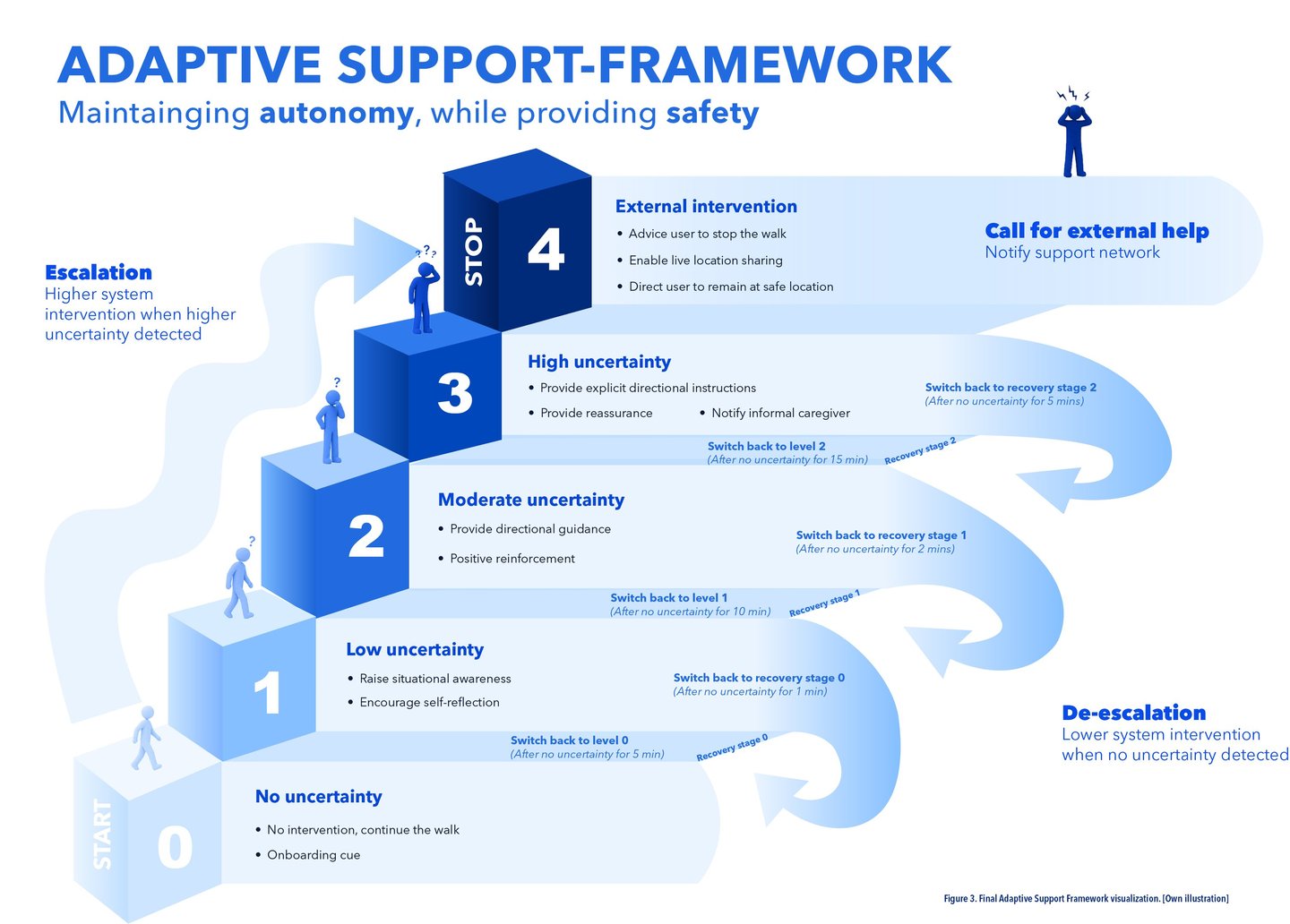
During my FMP, I also further developed my PI as a hybrid designer who takes a holistic, person-centered perspective, and made my value-based development approach practical. Although I applied this approach throughout my FMP, one clear example is how the tension between the autonomy of PwD and caregivers’ need for reassurance around safety shaped the Adaptive Support Framework (ASF). Through a Value Sensitive Design approach, I explored user needs and stakeholder values, and noticed the tension between autonomy and caregiver reassurance (U&S).
As described in my vision, I see impact as inseparable from creating value. Therefore, a final learning goal was to better understand how designs become manufacturable. Alongside my FMP, my Product Owner role at Aumens showed me how much implementability depends on planning, stakeholder alignment and early clarification of production dependencies. By coordinating with PEZY and Vention, I learned to align multi-company planning, identify dependencies between design, engineering and industrialization activities, and translate these into clear next steps to maintain momentum and prevent delays in the overall timeline (see Figure 2). This role also showed me how much manufacturability depends on concrete design decisions in preparation for a DFx phase. However, I learned to approach this critically, as focusing too strongly on production constraints too early can also limit creative exploration. My next learning goal is therefore to better decide when to open up design possibilities and when to narrow them down based on technical, financial, and organizational feasibility. To support this, I will further develop my manufacturability knowledge by reading Manufacturing Processes for Design Professionals by Rob Thompson [9].
"The model is an interesting starting point for further exploration, especially the conceptual idea of scales/levels, uncertainty classification, personalisation, and caregiver communication."
~ Maarten Houben, coordinator of DEMTECH, 04/06/2026
“We see this project as essential for keeping The Compass unique and maintaining a leading position in the field.”
~ Vincent Eurlings, CEO, 09/06/2026
M22 Learning goals
Reflecting on M22
I translated this tension into value propositions, care-network positioning and implementation requirements (B&E). MD&C made it actionable by operationalizing uncertainty into behavioural indicators, response checks and escalation logic. T&R shaped how this logic could be explored through affordable actuators such as vibration and voice feedback, while C&A inspired the aesthetics of the intervention experience so support remained respectful and understandable. This integration was informed by state-of-the-art perspectives on warm technology and Value Sensitive Design (U&S), behavioural uncertainty and automation logic (MD&C, T&R), calm multimodal interaction (C&A), and implementation pathways in dementia care ecosystems (B&E) [6], [7], [8].
This interchange and approach from different perspectives clearly demonstrates how EAs complement each other within value-based development. Because the ASF connected user values, system logic and implementation potential, it also became relevant beyond my FMP. This broader value was recognized by Maarten Houben and Vincent Eurlings.
“Tigo combines a professional working attitude with a pleasant way of collaborating. His next step as Product Owner would be to take more ownership in structuring decisions and project direction.”
~ Vincent Eurlings, CEO Aumens, 04/05/2026
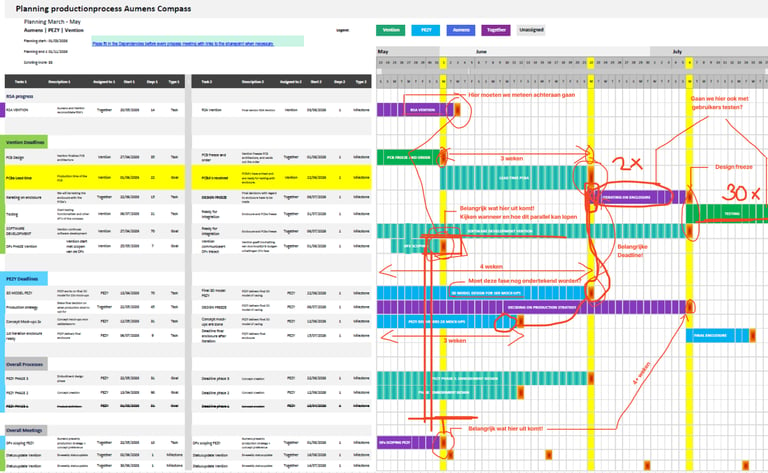
Figure 2. Overall planning update march with dependencies. [Own visual]
REFERENCES
[1] Aumens and Eindhoven University of Technology, “DemTech: Warm Intelligence for Dementia Support,” DEMTECH public–private partnership subsidy proposal, unpublished internal report, Oct. 2025
[2] “Het Kompas dat altijd naar huis wijst,” Aumens. Accessed: Jan. 06, 2026. [Online]. Available: https://aumens.com/
[3] “Eindhoven University of Technology.” Accessed: Jun. 10, 2026. [Online]. Available: https://www.tue.nl/en/
[4] “Vivent Mariaoord | Wonen Vivent | Rosmalen,” Vivent. Accessed: Jun. 10, 2026. [Online]. Available: https://www.vivent.nl/wonen/vivent-mariaoord/
[5] K. de Randamie, “Today I’m honored to share my thoughts with inspired teachers and students at the Utrecht School of the Arts,” LinkedIn, Apr. 2, 2026. Accessed: Jun. 14, 2026. [Online]. Available: https://www.linkedin.com/posts/blaxtar_human-innovation-activity-7445438802594025472-6e2u/
[6] B. Halfmann, “What is Value Sensitive Design? And what are the benefits?, ” Muteo. Accessed: Jun. 10, 2026. [Online]. Available: https://muteo.co/what-is-value-sensitive-design
[7] Weiser, Mark, and John Seely Brown. "Designing calm technology. " PowerGrid Journal 1.1 (1996): 75-85.
[8] S. Bakker, “Design for peripheral interaction,” Phd Thesis 1 (Research TU/e / Graduation TU/e), Technische Universiteit Eindhoven, Eindhoven, 2013. doi: 10.6100/IR754544.
[9] K. de Randamie, “Today I’m honored to share my thoughts with inspired teachers and students at the Utrecht School of the Arts,” LinkedIn, Apr. 2, 2026. Accessed: Jun. 14, 2026. [Online]. Available: https://www.linkedin.com/posts/blaxtar_human-innovation-activity-7445438802594025472-6e2u/
PAST
CAREER


